The emergence of STEAM
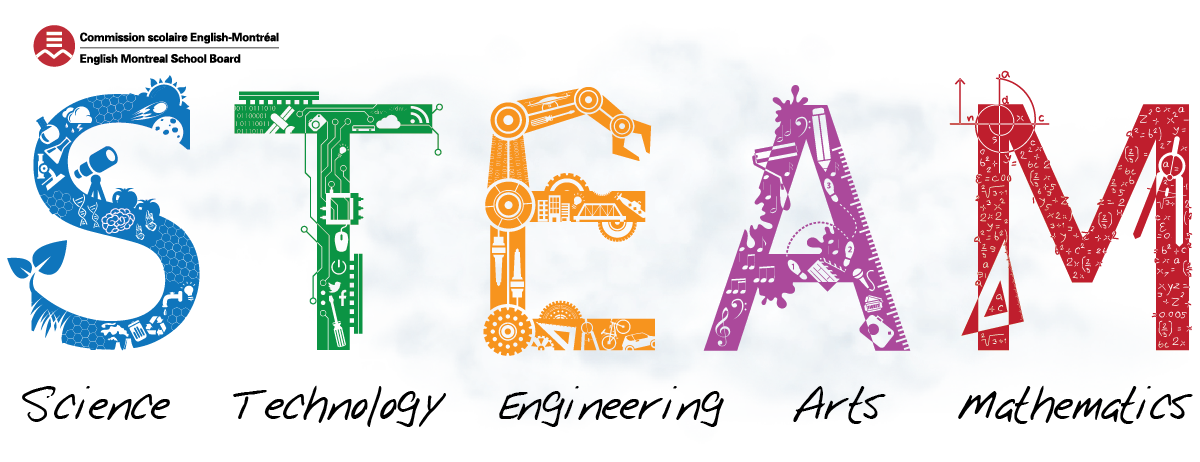
STEAM education (Science, Technology, Engineering, Arts, Mathematics), as a pedagogical approach, first emerged around 2006. Its predecessor, STEM, which was introduced about 5 years prior, was seen in educational circles as potentially lacking in the area of creativity, a highly coveted 21st century skill. The inclusion of the Arts was perceived as a practical way to address this deficiency, as well as in other key areas including divergent thinking, communication, empathy, and design.
Problem Solving and STEAM
Since the adoption of the competency-based Québec Education Program (QEP) in the early 2000s, the province has emphasized the importance of developing students' aptitude for problem-solving. This acknowledgement is explicitly stated in competency one of science & technology and also competency one of mathematics, at both elementary and secondary levels. Further, this notion aligns with international priorities, including the highly regarded PISA organization, who, in 2015, added collaborative problem solving as a key assessment metric alongside science, reading, mathematics, and financial literacy.
As young people spend more of their lives in digital spaces, concerns are growing about their limited exposure to real-world learning experiences — especially those that foster problem-solving and critical thinking. This shift has necessitated the development of key 21st-century skills such as creativity, critical thinking, technological literacy, flexibility, and perseverance.
At the English Montreal School Board, all STEAM-based Learning and Evaluation Situations (LES) are expected to be interdisciplinary, collaborative, problem or challenge based, authentic, process-driven (often guided by the engineering design process or design thinking), community-oriented, and grounded in the development of 21st-century skills.
The early days of STEAM: 2016-2018
STEAM education was first introduced at the EMSB during the 2016–2017 school year. Initially, only two elementary schools—Pierre Elliott Trudeau and General Vanier (absorbed by another board in 2019)—joined the initiative.
By the following year, interest had grown significantly: fifteen new schools had adopted the program, including thirteen elementary and two secondary.
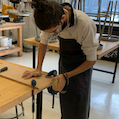
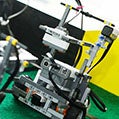
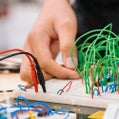
During this time, educators received extensive professional development (PD), and schools were granted substantial funding in order to establish Makerspaces; areas where tools and supplies are housed for the building of prototypes to occur. A Makerspace is to STEAM as a Laboratory is to Science.
Second Iteration: 2018-2023
From 2018 to 2023, the EMSB launched several targeted waves of PD aimed at strengthening the existing STEAM program. These included subject-specific workshops (English Language Arts, Science & Technology, Mathematics), cycle-based sessions, and technology-focused training in tools such as 3D printers, micro:bits, and cutters. A Teacher Training Lab (Makerspace+), was also established at 6000 Fielding Avenue, in part, to facilitate these PD opportunities.
Also during this time, great emphasis was placed on the notion that any and all projects that manifested as a result of integration of the STEAM pedagogical approach be connected directly to subject area content. At Educational Services, it was, and remains, our unwavering contention that STEAM not be seen as an “add-on”, rather an alternative to, traditional methods of teaching and learning.
Next Steps - Three Year Pilot: 2023-current
In 2023, we shifted our approach, focusing on one school - a three year pilot project at East Hill Elementary in Rivière-des-Prairies. This grass roots design came into existence with the goal of attaining a systemic and enduring pedagogical shift at East Hill.
The first year of the pilot featured five full days of professional development for all teaching staff, from Pre-K (K4) to Grade 6. Key activities included:
- Curriculum mapping across all subject areas
- Identification of common interdisciplinary themes
- Development of problem statements tied to curricular goals
- Creation of turn-key Learning and Evaluation Situations (LESs) for every grade level
- Distribution of ‘maker bins’ with essential hands-on materials for each classroom
In years two and three, similar work has ensued, with the goal of creating a lasting, adaptable bank of LESs that could be employed at any time, regardless of staff turnover. By the end of the three-year initiative, the goal is for STEAM education to become the primary pedagogical model employed throughout the school year, across all grade levels. The hope is that STEAM will be seen as embedded into the school's identity, with teachers continuing to engage in this approach beyond the three-year timeframe.
Expansion and Future Goals
The STEAM program at EMSB marks a forward-thinking shift in education—prioritizing critical thinking, collaboration, and hands-on learning. The pilot project’s success at East Hill Elementary, and its subsequent expansion into two additional schools, demonstrates the program’s transformative potential.
The EMSB's STEAM program represents a significant step forward in education, addressing the need for effective problem-solving skills and hands-on learning experiences. By embedding STEAM into the fabric of education, EMSB is fostering a dynamic, collaborative, and future-ready learning environment that prepares students for the challenges of the 21st century.
Jason Bixby (M.Ed., MBA) and Valerie Honig (M.A.) of the educational services department are behind this initiative.